
LTPM: Swiss Register of Beneficial Ownership

A major reform for Swiss companies
Switzerland is preparing to take a significant step in the fight against money laundering and financial crime. In autumn 2025, the Federal Parliament adopted the Federal Act on the transparency of legal entities and the identification of beneficial owners (LTPM). This new regulation provides for the creation of a centralised federal register of beneficial owners and will impose new obligations on a large number of Swiss companies from the second half of 2026 onwards.
This reform is part of an international dynamic driven notably by the FATF (Financial Action Task Force), the OECD and the European Union, which are demanding greater transparency regarding the true economic beneficiaries behind legal structures. Switzerland is thus adapting its legal framework to preserve the credibility and reputation of its financial centre.
For companies, this new Swiss law on beneficial ownership transparency represents a significant change in compliance and governance obligations.
Pourquoi la Suisse introduit-elle la LTPM ?
Since 2015, shareholders (or partners) holding at least 25% of a Swiss company have been required to disclose their identity to the company (to the board of directors or the management). However, this information was kept in private, decentralised registers, with no centralised oversight or means of effective verification.
The FATF had identified several shortcomings in the Swiss system, particularly concerning complex ownership structures, nested holdings, or certain chains of participation that allow for the concealment of beneficial owners. The LPPT responds to these criticisms by establishing a federal transparency register managed by the Federal Office of Justice (FOJ).
Which companies are affected by LTPM?
The new Swiss corporate transparency law primarily targets public limited companies, which will increasingly be a misnomer, and limited liability companies (LLCs), but also cooperatives, SICAVs, and SICAFs.
Certain foreign entities with a sufficient connection to Switzerland, such as a branch, effective management, or real estate, will also be affected.
However, several structures are excluded from the scope of application:
- publicly traded companies and their majority-owned subsidiaries,
- the foundations,
- associations,
- Partnerships.
These exclusions are primarily based on the fact that some of these structures are already subject to other transparency obligations.
Who is considered the «beneficial owner»?
The concept of the beneficial owner is at the heart of the reform. This is not necessarily the person officially registered as a shareholder, but rather the person who exercises effective control over the company.
In particular, any natural person who holds, directly or indirectly, at least 25% of the capital or voting rights and who exercises control by other means, such as a shareholders’ agreement, a veto right, a dominant influence or an intermediate structure, shall be deemed to be a beneficial owner.
This analysis may require tracing back several levels of ownership to identify the individual who effectively controls the company. There can be multiple beneficial owners for the same company, which can sometimes complicate analysis for groups or holding structures.
A centralised and non-public register
Contrary to popular belief, the Swiss transparency register will not be accessible to the general public. Access will be restricted:
- to the competent authorities; ;
- to financial intermediaries; ;
- to professionals subject to the Money Laundering Act, such as lawyers, notaries, auditors or banks.
The objective is to reconcile the requirements of transparency with the protection of private life and personal data.
The new obligations of Swiss companies
1. Identify beneficial owners
As has already been the case since 2015, the companies concerned will have to analyse their shareholding structure in order to identify the natural persons exercising effective control.
2. Verify and document information
Companies will need to collect, verify and document several pieces of information: the full identity of the beneficial owners, the nature of the control exercised, the extent of the shareholdings or voting rights, and the chain of ownership.
3. Declare information to the Transparency Register
The data will have to be transmitted to the federal transparency register or, in certain simplified cases, directly to the commercial register.
4. Keep the information up to date
Any change to the holding structure or control exercised must be announced promptly. A common operation such as a change of director, a capital increase or a transfer of shares could therefore trigger new reporting obligations.
5. An obligation of expanded collaboration
The law does not just target companies and their shareholders. Third parties involved in the chain of control, as well as the beneficial owners themselves, will also have an obligation to cooperate to enable the full identification of beneficial owners.
A procedure for reporting discrepancies
The LTPM also provides a mechanism for reporting inconsistencies or discrepancies in the information declared to the transparency register. This procedure aims to strengthen the reliability of the recorded data and limit the risks of inaccurate declarations.
What impact for SMEs?
For many Swiss SMEs with a simple and already well-documented structure, the impact will remain relatively limited. The draft ordinance even provides for simplified procedures for limited liability companies (Sàrl) where all partners are natural persons, as well as for public limited companies (SA) held by a sole shareholder who is also the director and the sole beneficial owner.
Conversely, for complex structures, holding companies, cross-shareholdings or international chains of control, the identification and documentation work could be significantly more substantial.
What are the deadlines for complying?
The transitional periods provided for by the LTPM are relatively short.
In principle, companies will have to register within one month of a change to the commercial register and, depending on the type of structure, certain companies will have a period of three to six months after the law comes into effect. It is therefore strongly recommended to anticipate the necessary steps now in order to avoid urgent compliance.
What are the sanctions for non-compliance?
The LTPM provides for several significant sanctions in case of breach of obligations, such as the suspension of social and patrimonial rights, refusal of registration in the trade register, fines of up to several hundred thousand francs, and the liquidation of the company according to bankruptcy rules in the most serious cases.
Beyond legal sanctions, non-compliance detected during an audit, financing, or transaction can also have significant reputational and operational consequences.
Anticipate to better comply
While the fundamental principles of LTPM are now known, certain practical arrangements will still be clarified by implementing texts. However, businesses have every interest in taking advantage of this transitional period to assess their situation and anticipate any necessary steps. Advance preparation will not only facilitate compliance but also limit the risks associated with incomplete or late declarations.
Our legal department is at your disposal to assist you with the analysis of your situation, the identification of beneficial owners, and the implementation of the new obligations arising from the LTPM.
Latest news

Vote on 27 September: Initiative 12% – what you need to know
On 27 September, the people of Vaud will vote on the «12%» initiative, which proposes a 12% reduction in cantonal tax on income, wealth and capital gains. What you need to know before voting.

Annual VAT reconciliation
Annual VAT reconciliation is compulsory for all taxable businesses in Switzerland. Find out why it's essential, what the deadline is and how our experts can help you avoid errors and penalties.
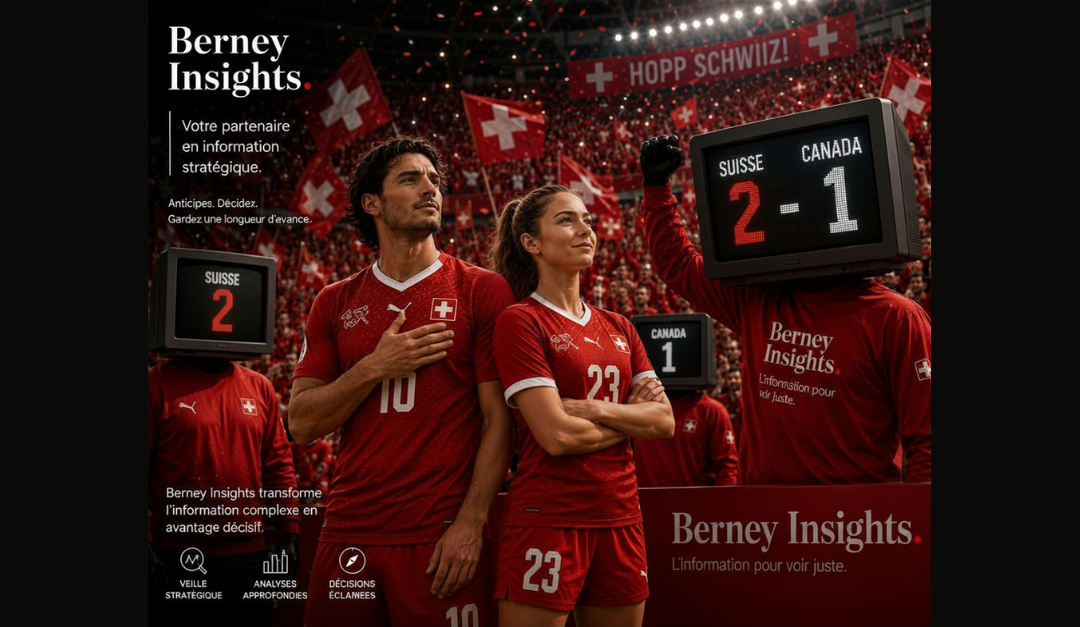
Business Intelligence comes to the World Cup
Four collaborators have built a near real-time scoreboard for the internal World Cup predictions. A project that perfectly illustrates the Berney Insights approach: making data readable, dynamic, and shared.
 Français
  English (UK)
  Deutsch